

Even though April, Earth Month, is over- ABCDC continues to prioritize sustainability and climate-friendly goals!
ABCDC has been a participant in this year’s Collaborative Climate Action Planning Program Cohort, to create a roadmap towards decarbonization and tangible green goals for our organization. This program, run by the Boston Green Ribbon Commission (GRC), aims to help Boston organizations and institutions develop a Climate Action Plan (CAP) framework in a peer learning environment. The cohort program, running from September 2024 – May 2025, consists of monthly meetings with the GRC facilitators, topic experts, and other cohort members. Peer organizations include many notable Boston institutions and groups, including but not limited to, the Boston Lyric Opera, Boston Youth Symphony Orchestra, Commonwealth Land Trust, The Community Builders, and The Trustees.
The hope behind participating in this cohort is to fully consider the impacts of climate change on our organization, the affordable housing we own, and the communities we serve to create a clear roadmap of the best ways to address those impacts while conducting the mission of ABCDC. As ABCDC decarbonizes our housing portfolio, this CAP will guide us to be intentional on what we do, how we do it, and who we will impact.
The CAP is an opportunity to standardize and organize the current existing efforts by ABCDC. ABCDC has been eagerly working towards the goal of decarbonizing our housing portfolio of 553 units in 12 buildings, by 2040. Efforts include Deep Energy Retrofits (DERs)/building weatherization projects, solar installation, collaboration with state and local agencies and building decarbonization industry experts, and a general office interest to minimize waste and lower carbon footprints.
As part of the process for developing the CAP, ABCDC has conducted a baseline assessment of the three parts of Climate Action Planning (i.e. mitigation, resiliency, and climate justice issues) among our community engagement, housing portfolio, and resident services. After the baseline information was collected, the next step was to develop goals, targets, strategies, and action. The plan development has provided structure and a marker of measurable and achievable steps to move towards. A key element to the process has also been working together and ideating with inter- and intra- organizational stakeholders in order to truly make the process at collaborative process.
Mitigation
Mitigation, or the implementation of strategies to slow down the impacts and consequences of climate change, involves actively reducing carbon emissions in organizational activities. In order to mitigate for climate change, the City of Boston has implemented the Building Emissions Reduction and Disclosure Ordinance (BERDO). This local law sets requirements for large existing buildings to reduce their greenhouse gas emissions over time.
For ABCDC, a major source of emissions is the operation of the housing units that the organization owns. With one Deep Energy Retrofit (DER) completed, one in construction, and two in the pipeline, ABCDC is on track to meeting and going beyond BERDO requirements. Other mitigation strategies include continued office-wide waste and emissions reductions and continued sustainability and climate education programming.
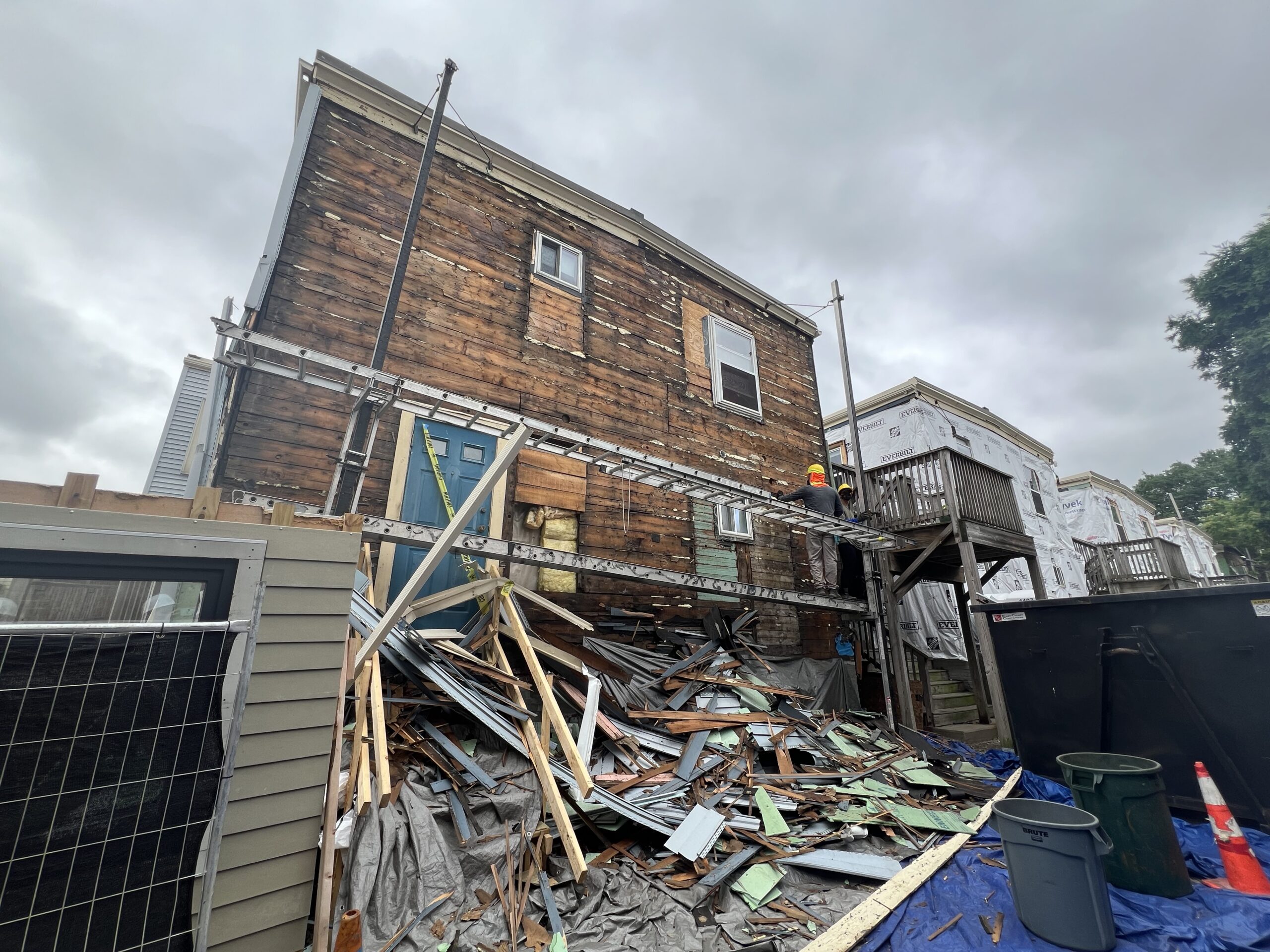
Hano Homes, ABCDC’s second Deep Energy Retrofit project, in construction
Resilience
Considering climate resilience, or the preparation of the impact of climate change, requires an analysis of the climate hazards that exist in a specific location. As greenhouse gas emissions increase and continue to cause climate change, there are increasing risks of extreme weather, extreme heat, flooding, and sea level rise. The baseline review for resiliency in the ABCDC CAP looks at the biggest risks to current Allston and Brighton residents, community assets, and properties. The climate resiliency goals for ABCDC include all CDC-owned buildings to be more climate resilient and preparing access to resources and education to residents about what to do in extreme weather events.

Nighttime temperature heat map of Allston and Brighton from the City of Boston Heat Map Explorer
Climate Justice
Climate justice, or how we prepare, ensure access, and react to climate change, involves identifying all stakeholders and key players and how climate mitigation and resiliency work will involve and impact those members. We know that the effects of climate change disproportionately effects low-income and BIPOC communities due to historical injustices and systemic inequalities. As a community development organization and affordable housing developer, ABCDC serves many different vulnerable populations with all properties located in Environmental Justice communities. This component of the CAP allows ABCDC to define our organizational identity and impact, stakeholders, and how we make change equitably when we are doing climate action and planning.
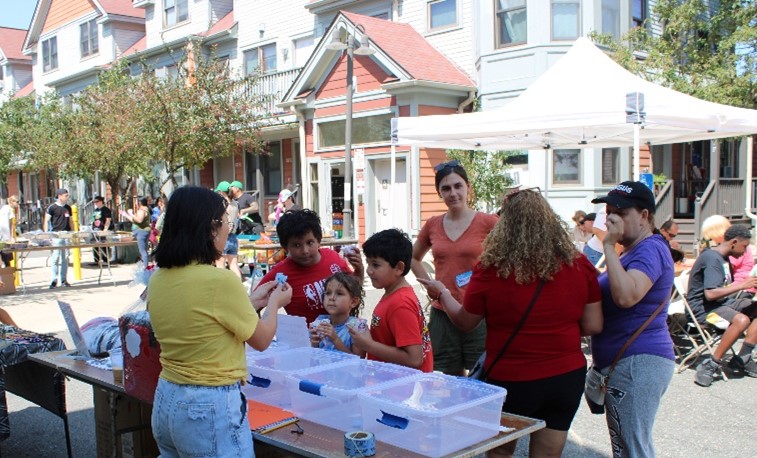
ABCDC Annual Block Party, held at the Brian J. Honan Apartments
If your Boston-based organization is interested in participating in the next cohort of organizations in the Collaborative Climate Action Planning program to develop your practical, actionable Climate Action Plan, sign up to enroll!
ABCDC’s involvement in this CAP work has proven the organization’s commitment to decarbonization, combatting climate change, and preparing for the impacts of climate change. The next steps are to continue to iterate the plan with our staff and outside stakeholders and finalize these goals so we can continue to advance our climate work!
The official CAP is currently still in draft form, but we hope to share ABCDC’s mission, goals, and findings soon! If you are interested in learning more about this process or our commitment towards decarbonization, please contact our Real Estate Development staff at [email protected] or [email protected].